
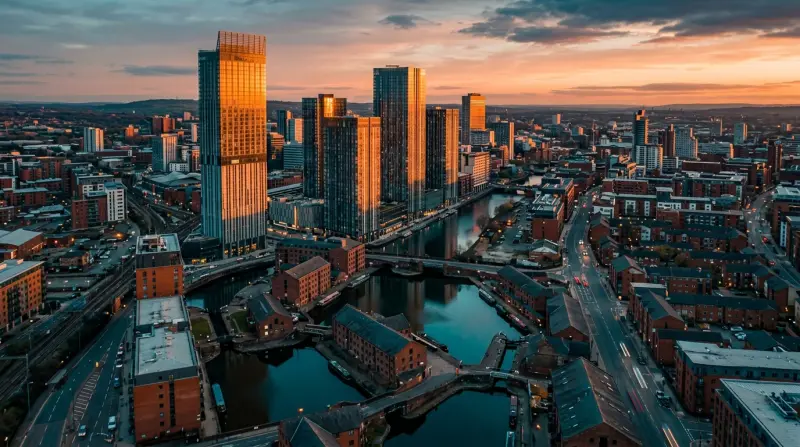
Manchester is the beating heart of property investment in the North West. From converted cotton mills in Ancoats to new-build towers along the Irwell, the city's commercial and investment property market moves fast - and the finance behind those deals needs to keep pace.
Mallard Bridging provides short-term property finance from £25,250 to £40,000,000 for business and investment purposes across Greater Manchester. With same-day decisions and the ability to complete in as few as two working days from approval, we work at the speed Manchester's property market demands.
This guide covers how bridging finance works in the Manchester market, which property types and areas present the strongest opportunities, and how to structure a deal that completes on time.
Why Manchester's Property Market Suits Bridging Finance
Manchester has undergone a sustained transformation over the past two decades. What was once a city of empty warehouses and derelict mills is now a sprawling investment hub where capital flows into residential conversions, commercial refurbishments, and ground-up developments at a rate matched by few cities outside London.
That pace creates a particular kind of problem: traditional lending cannot keep up. High street banks and conventional mortgage providers work on timescales measured in weeks or months. Manchester's investment market operates on timescales measured in days.
Consider what a typical month looks like for an active property investor in Greater Manchester:
- An auction lot in Levenshulme goes under the hammer with a 28-day completion deadline
- A six-unit apartment conversion in the Northern Quarter needs urgent refinancing before the existing facility expires
- A commercial unit on Deansgate comes to market at a price that will not last beyond the week
- A semi-derelict terrace in Salford is perfect for HMO conversion but unmortgageable in its current state
Every one of these scenarios has a common requirement: speed. Bridging finance fills the gap between identifying the opportunity and securing long-term funding.
If you are new to this type of facility, our guide on what a bridging loan is explains the fundamentals before diving into Manchester-specific considerations.
Manchester Investment Hotspots and Property Types
Ancoats and New Islington
Once the world's first industrial suburb, Ancoats has become one of Manchester's most desirable investment locations. The transformation from derelict cotton mills to high-specification apartments, independent restaurants, and creative workspaces has driven significant capital appreciation over the past decade.
For property investors, Ancoats presents opportunities in mill conversions - purchasing older residential stock that needs modernisation before it qualifies for mainstream buy-to-let mortgages. These transitional properties sit in exactly the space where bridging finance operates: the asset has strong long-term value but needs work before conventional lenders will touch it.
New Islington, immediately adjacent, continues to attract development capital. Mixed-use schemes combining residential and commercial space are a natural fit for development bridge finance, funding the construction or conversion phase before units are sold or refinanced individually.
Northern Quarter and City Centre
The Northern Quarter remains Manchester's creative and cultural hub, with a commercial property market dominated by independent retail, hospitality venues, and flexible office space. Investors acquiring commercial premises in this area often face competition from cash buyers and need to move quickly to secure deals.
City centre investment property - particularly in the Deansgate, Spinningfields, and Peter Street corridors - tends toward higher-value transactions. Facilities from £500,000 to several million pounds are common for commercial acquisitions or the purchase of multiple residential units in a single building.
Understanding the different types of bridging loans available helps investors match the right facility structure to their specific Manchester deal.
Salford Quays and MediaCity
The Salford Quays regeneration, anchored by MediaCityUK, has created a distinct micro-market. BBC and ITV relocations brought thousands of media professionals into the area, generating sustained demand for high-quality rental accommodation. Buy-to-let investors targeting young professionals find strong rental yields supported by an employment base that shows no sign of contracting.
Properties in the Quays area that require refurbishment before letting - outdated interiors, non-compliant electrics, or tired communal areas - are prime candidates for short-term property finance. The bridging loan funds the purchase and renovation, and once the property reaches lettable condition, a buy-to-let mortgage repays the bridge.
Oxford Road Corridor and University Districts
Manchester's two major universities - the University of Manchester and Manchester Metropolitan - create one of the largest student populations in Europe. The Oxford Road corridor running south from the city centre through Fallowfield, Withington, and Didsbury supports a substantial HMO and student accommodation market.
HMO conversions are a particularly strong use case for bridging finance in these areas. Investors purchase large Victorian or Edwardian houses, convert them into licensed multi-bedroom properties, and achieve rental yields significantly above standard single-let returns. The conversion period - during which the property is uninhabitable and therefore unmortgageable - is precisely where bridge finance fills the gap.
Properties requiring planning permission for change of use (typically C4 HMO or sui generis for larger HMOs) often need the full Mallard Bridging facility term of up to 12 months, giving investors time to complete conversions, obtain licences, and arrange long-term refinancing.
Trafford Park and Industrial Manchester
Trafford Park remains one of the largest industrial estates in Europe, and the surrounding areas - Stretford, Urmston, and the Trafford Centre corridor - contain significant commercial and light industrial property. Investors acquiring warehouse space, distribution units, or trade counter premises often find that commercial mortgage timescales do not match the speed at which these assets change hands.
Bridge finance for commercial property acquisitions in the Trafford area typically involves straightforward first charge structures with exit via commercial mortgage or sale. The industrial property market in Greater Manchester has benefited from the growth of e-commerce logistics, driving demand for warehouse and distribution space.
How Bridging Finance Works for Manchester Property Deals
The mechanics of a bridging facility are consistent regardless of location, but the Manchester market presents specific patterns worth understanding. Here is how a typical deal flows.
Step one: initial enquiry and same-day assessment. Contact Mallard Bridging with your property details, proposed loan amount, and intended exit strategy. For Manchester property, we are familiar with local market values and can assess viability rapidly. A quote typically arrives within hours.
Step two: desktop valuation and formal offer. A desktop valuation establishes the current market value of the security property. For Manchester, strong comparable data across most postcodes means valuations proceed without delay. Formal terms are issued once the valuation supports the requested loan-to-value ratio.
Step three: legal work and completion. Your solicitor and the lender's solicitor handle title checks, searches, and charge registration. With experienced Manchester-based solicitors who understand bridging transactions, legal completion can be achieved within days.
Step four: funds release. Money is transferred to your solicitor's account, and from there to complete your purchase, refinance, or investment. With Mallard Bridging, you could have money in your bank within two working days of approval.
For a detailed breakdown of the full application journey, our guide on how bridging loans work covers each stage in depth.
Discuss Your Manchester Property Deal
Our bridging finance specialists are available Monday-Friday, 9:00 AM - 5:30 PM.
Auction Finance Across Greater Manchester
Manchester has an active regional auction market. BTG Eddisons Property Auctions - the consolidated brand now incorporating SDL, Pugh and Mark Jenkinson following the February 2026 rebrand - alongside Auction House Manchester regularly catalogue investment properties across Greater Manchester, from terraced houses in Oldham and Rochdale to commercial units in Bolton and Wigan.
The 28-day completion deadline imposed by auction terms means traditional mortgage lending is rarely viable. Bridging finance is the standard funding route for auction purchases, and the process is well-established.
- Same-day decision in principle before you bid
- Completion within the 28-day auction deadline, subject to legal process
- Finance available for unmortgageable and non-standard properties
- All costs rolled into the gross loan - no separate fee invoices
- No monthly payments during the loan term
- No exit fees at Mallard Bridging
- Timely repayment discount for settling on or before the agreed date
Many experienced Manchester auction buyers arrange an agreement in principle before attending the sale. This provides confidence to bid knowing that finance is already provisionally in place. Our guide to auction property finance covers the complete process from pre-auction preparation through to completion.
The Cost Structure: Transparent from Day One
One of the most common questions from Manchester property investors concerns the total cost of a bridging facility. At Mallard Bridging, the answer is straightforward: all costs are rolled into a single gross loan amount.
Here is what that means in practice:
- Net loan: The cash you receive - the amount you need for your purchase, refinance, or project
- Gross loan: The total amount you repay at exit, which includes setup fees, legal costs, valuation fees, and rolled-up interest
- Monthly payments: None. Interest is rolled up and included in the gross figure
- Exit fees: Zero. There are no penalties or charges when you repay
- Timely repayment discount: Available when you repay on or before the agreed exit date
This structure means you know the complete cost picture before you commit. Your quote shows exactly what you will receive and exactly what you will repay - no hidden invoices, no separate fee demands, and no surprises during the loan term.
For a comprehensive breakdown of how pricing works across different deal types, see our guide to bridging loan costs and fees.
Development and Refurbishment Finance in Manchester
Manchester's ongoing regeneration means development opportunities continue to emerge across the city region. From mill conversions in the Castlefield and Whitworth Street corridor to new-build schemes on brownfield sites in east Manchester, developers need finance that matches the speed of planning and construction cycles.

Bridging finance supports the acquisition phase of development projects - purchasing the site or building before full development finance is arranged, or funding lighter refurbishment works that do not require a full development facility.
Common Manchester refurbishment scenarios include:
- Cosmetic renovation of dated rental stock in Didsbury, Chorlton, or Sale to achieve higher rental yields
- HMO conversion of large family houses in Fallowfield, Rusholme, and Levenshulme into multi-bedroom licensed properties
- Commercial-to-residential conversions under permitted development rights, particularly former office space in the city centre
- Condition-based purchases where properties fail standard mortgage surveys but have strong underlying value
For investors considering how to structure their exit from a refurbishment bridge, our guide to exit strategies covers the most common approaches.
Second Charge Facilities for Portfolio Investors
Manchester portfolio landlords often hold significant equity across multiple properties. A second charge bridging loan allows investors to unlock that equity without disturbing existing mortgage arrangements - useful when the current mortgage rate is favourable and remortgaging would mean losing it.
Second charge facilities are commonly used by Manchester investors to:
- Fund auction deposits using equity in existing portfolio properties
- Cover refurbishment costs on a new acquisition without increasing the first charge
- Release capital for business purposes secured against investment property
- Bridge the gap between selling one property and completing on another
Second charge completions typically take seven to fourteen working days because they require consent from the first charge lender. Planning ahead and instructing solicitors early helps keep timelines tight.
Why a Manchester-Based Lender Matters
Manchester's investment property market has its own rhythms, price points, and opportunity patterns. Working with a lender that understands the local market provides practical advantages.
- Familiarity with Manchester property values means faster, more confident valuations
- Understanding of local planning policies and regeneration zones
- Knowledge of which Manchester postcodes support strong rental yields
- Experience with common local deal structures (HMO conversions, mill apartments, commercial units)
- Relationships with Manchester-based solicitors experienced in bridging completions
- Accessibility for face-to-face meetings when complex deals benefit from direct discussion
Mallard Bridging is based in Manchester. The team understands the difference between a Castlefield canal-side conversion and a Trafford Park industrial unit - and how to structure the finance accordingly.
Scenarios Where Manchester Investors Use Bridging Finance
- Traditional mortgage declined due to property condition
- Auction purchase with a 28-day completion deadline
- Existing bridging facility approaching expiry and needing refinancing
- Commercial property opportunity that will not wait for bank timescales
- HMO conversion requiring upfront capital before the property generates income
- Portfolio restructuring where speed prevents losing favourable purchase terms
Each of these situations shares a common thread: the conventional lending market either cannot act quickly enough or will not lend against the property in its current state. Bridging finance resolves both problems, providing capital on a timeline that matches the opportunity.
For time-critical deals where every day counts, our guide to fast bridging loans explains how to prepare your application for the fastest possible completion.
Getting Started with Your Manchester Deal
Whether the property is a Victorian terrace in Levenshulme heading to auction, a commercial unit in Trafford Park, or a city centre apartment needing modernisation before it qualifies for a buy-to-let mortgage, the first step is the same: get in touch.
Mallard Bridging provides facilities from £25,250 to £40,000,000 for business and investment purposes across Greater Manchester and the whole of England and Wales. All costs are rolled into the gross loan, there are no exit fees, and a timely repayment discount is available for borrowers who repay on or before the agreed date.