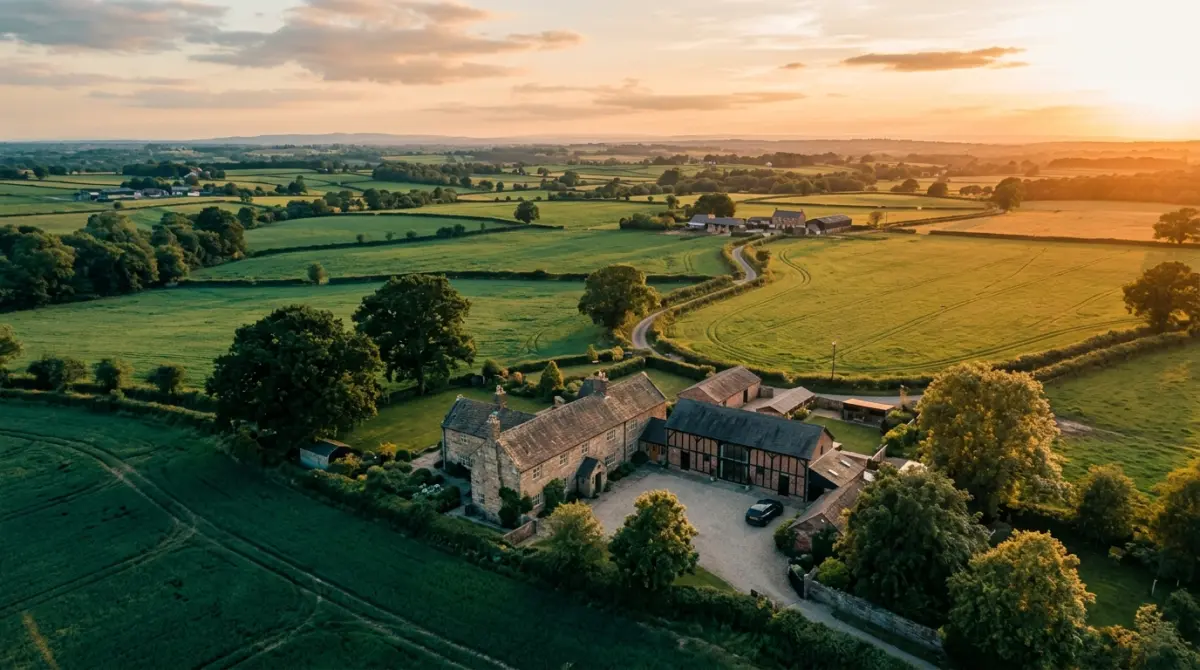
Cheshire presents a distinctive property landscape for business investors. From the premium residential streets of Alderley Edge and Wilmslow to the commercial centres of Warrington and Chester, the county combines high-value stock with genuine diversity of opportunity. That combination creates demand for flexible, fast property finance that high-street lenders consistently fail to deliver.
Bridging finance fills the gap. It provides the speed to secure competitive deals, the flexibility to fund projects that traditional lenders decline, and a structure that suits the short-term nature of property transactions across this part of the North West.
This guide covers how bridging loans work for Cheshire property deals specifically - the types of opportunities that suit this form of finance, the areas driving investor activity, and what to expect from the process.
Why Cheshire Property Deals Need Bridging Finance
Cheshire's property market operates differently from most English counties. Average transaction values sit well above the national figure, driven by concentrations of wealth in the Golden Triangle villages and the county's position as a commercial corridor between Manchester and the Midlands. That creates specific challenges for investors relying on traditional bank lending.
High-Value Stock Requires Decisive Action
Properties in Knutsford, Prestbury, Hale, and the Alderley Edge corridor regularly trade at values that push standard mortgage applications into extended underwriting. A commercial conversion opportunity on a former estate building or a mixed-use premises in a village centre might list at a price point where mainstream lenders need weeks of committee review. The vendor, meanwhile, favours the buyer who can exchange contracts quickly.
Bridging finance removes that friction. With Mallard Bridging, initial assessments happen on the same business day you enquire. For a prepared borrower with documentation ready, the entire process from application to funds can compress into days rather than the weeks or months that conventional lending demands.
Auction Dynamics in the North West
The North West auction rooms - including those covering Cheshire lots - move at pace. Properties in Chester, Northwich, and the Warrington corridor appear regularly in regional auction catalogues, many through Auction House Cheshire (operated by Wright Marshall from Tarporley) and Meller Braggins, with further lots from BTG Eddisons Property Auctions. Entries often reflect the need for refurbishment or change of use. The standard 28-day completion deadline after the hammer falls leaves no room for a traditional mortgage application.
Auction property finance through a bridging facility provides the certainty to bid with confidence. The decision in principle can be in place before auction day, and completion follows within the required timeframe. For Cheshire lots, where competition from cash buyers and experienced investors is strong, this speed makes the difference between securing the asset and losing it.
Agricultural and Rural Conversion Opportunities
Cheshire's rural landscape includes a significant stock of former agricultural buildings, redundant farmsteads, and country estates with outbuildings ripe for conversion. Planning authorities across Cheshire East and Cheshire West and Chester have approved numerous barn conversions and agricultural-to-commercial changes of use under both full planning and permitted development rights.
These projects rarely qualify for standard commercial mortgages. The property in its current state - an unconverted barn, a disused milking parlour, former stabling - does not meet the criteria that term lenders require. A bridging facility funds the acquisition and holds the asset through the conversion period, with the borrower exiting onto permanent finance or selling the completed scheme.

Cheshire's Key Investment Areas
Understanding where opportunity concentrates across the county helps investors target their search and structure their finance appropriately.
Chester: Historic City, Modern Demand
Chester's economy rests on tourism, professional services, and the University of Chester. The city's historic core - the Rows, the walled circuit, the cathedral quarter - generates consistent demand for commercial and mixed-use premises. Investors acquire retail units, office conversions, and serviced accommodation in the city centre, while the suburbs and satellite villages offer buy-to-let stock serving the university and professional tenant market.
For buy-to-let bridging in Chester, the typical scenario involves acquiring a property that needs refurbishment to meet modern tenant expectations, completing works quickly, then refinancing onto a standard mortgage at the improved value. The city's rental demand - driven by students, young professionals, and tourism workers - provides a reliable exit route through refinance because lenders can see the rental income potential.
Warrington: Commercial Growth Corridor
Warrington sits at the junction of the M6, M62, and M56, making it one of the most connected commercial locations in the North West. The town has attracted major logistics operators, distribution centres, and business parks. Omega Business Park alone hosts operations for major employers, and the surrounding commercial zones continue to expand.
For property investors, Warrington offers commercial premises, light industrial units, and mixed-use buildings at values below Manchester or Liverpool equivalents but with strong occupier demand. Bridging finance funds the acquisition of commercial assets where the buyer plans to improve, re-let, or reposition the property before refinancing onto a commercial term loan.
The residential side of Warrington also merits attention. Large Victorian and Edwardian properties in the town centre convert well into HMOs or multi-let configurations, serving the professional tenant base that the town's growing commercial sector creates.
Alderley Edge, Wilmslow, and the Golden Triangle
The villages along the A34 corridor south of Manchester command some of the highest property values outside London. For business investors, the opportunity is less about residential acquisition and more about the commercial and mixed-use premises that serve these affluent communities.
Former retail premises converting to professional office space, restaurant and leisure units in village centres, and development sites on the edges of these settlements all represent transactions where bridging finance provides the means to move decisively. The higher property values in this corridor mean larger facility sizes - Mallard Bridging funds deals up to £40,000,000, and the same rapid decision process applies to a seven-figure facility as to a smaller transaction.
Crewe and the HS2 Corridor
Crewe's designation as a key hub on the HS2 network has generated sustained interest from property investors. The town and surrounding areas have seen increased commercial development activity, with investors positioning ahead of the infrastructure investment that the rail connection brings.
Development land near the proposed station area, commercial premises along the Nantwich Road corridor, and residential investment stock in the wider Crewe postcode all attract attention from investors using short-term finance to secure positions. The typical approach involves acquiring at current values with bridging, then holding or developing until the infrastructure effect lifts the area.
Macclesfield and the Eastern Fringe
Macclesfield bridges the gap between the affluent Cheshire villages and the Peak District. The town's commercial centre includes former mill buildings and industrial premises that suit conversion to offices, residential apartments, or mixed-use schemes. Its position on the edge of the Peak District National Park also creates opportunity in leisure and hospitality - boutique hotels, country dining venues, and outdoor recreation facilities.
Considering a Cheshire Property Investment?
Our bridging finance specialists are available Monday-Friday, 9:00 AM - 5:30 PM.
Types of Cheshire Property Deals Suited to Bridging
The diversity of Cheshire's property stock means bridging finance serves a wide range of transaction types. The common thread is the need for speed, flexibility, or both.
Commercial Acquisitions
Office buildings in Chester and Warrington, retail units in market towns, industrial premises across the county - commercial property acquisitions frequently need bridging when the buyer identifies an opportunity that requires rapid completion. A vendor in financial difficulty, a receivership sale, or a time-limited off-market opportunity all create scenarios where the ability to complete in days outweighs the cost advantage of slower conventional lending.
Buy-to-Let Investment Properties
Cheshire's rental market supports strong yields in certain postcodes. Chester's student and professional lettings, Warrington's corporate tenant demand, and the steady rental market across Crewe and Northwich all offer viable investment cases. Bridging finance covers the acquisition - and refurbishment where needed - with the investor then moving to a buy-to-let mortgage based on the rental income the property generates.
Understanding the different types of bridging facilities helps investors choose the right structure for their specific situation.
Barn and Building Conversions
Permitted development rights and sympathetic planning policies across Cheshire's local authorities have opened up conversion opportunities on agricultural buildings, former commercial premises, and redundant institutional properties. These projects require acquisition finance that traditional lenders cannot provide because the property in its unconverted state does not meet standard lending criteria.
A bridging facility funds the purchase, and in many cases a proportion of conversion costs can be included within the same arrangement. The borrower exits by selling the completed units, refinancing the finished scheme, or a combination of both.
Development Land
Sites with planning consent - or those being acquired subject to planning - represent another common use for bridging in Cheshire. Land parcels near Crewe, infill sites in Warrington, and smaller plots in market towns all trade at values and timescales where bridging provides the means to secure the asset while longer-term development finance is arranged.
Hotel and Leisure Properties
Cheshire's countryside tourism economy supports a network of hotels, country house venues, and leisure properties. Acquiring these assets at auction or through private treaty often requires speed that hospitality-sector mortgage lenders cannot match. Bridging provides the acquisition finance, with the buyer then arranging specialist hospitality lending based on the trading performance of the business.
Equestrian Properties and Rural Estates
The county has one of the highest concentrations of equestrian properties in England. Livery yards, training facilities, and country estates with equestrian provisions represent a specialist asset class. These properties are typically too complex for standard commercial mortgages - the mix of land, buildings, and specialist facilities creates valuation challenges that slow conventional lenders. Bridging cuts through that complexity by lending against the property value and allowing the borrower time to arrange permanent finance.

How Bridging Finance Works for Cheshire Deals
The mechanics of a bridging facility are consistent regardless of location, but understanding the process helps Cheshire investors prepare effectively and move quickly when the right deal materialises.
The Application Process
-
Initial enquiry - Contact Mallard Bridging with the basic details: property type, location, purchase price, and intended use. An initial assessment follows the same business day.
-
Quote - If the deal fits, a quote is issued showing the net loan amount (the cash received), the gross loan amount (including all costs), and the term. This gives a complete cost picture before any commitment.
-
Formal application - Submit supporting documentation including proof of identity, details of the security property, and evidence of the exit strategy.
-
Valuation - A desktop valuation is arranged by the lender. This assessment covers the property's current market value and, where relevant, its projected value after works or conversion.
-
Legal process - Solicitors act for both borrower and lender. Having a solicitor instructed and ready to act before applying removes a common source of delay.
-
Completion and funds release - Once legal work is complete, funds are released to the borrower's solicitor for completion. For straightforward first charge deals, this entire process can compress into days.
For a detailed explanation of each stage, the guide on how bridging loans work covers the full process.
Cost Structure
Mallard Bridging operates a transparent pricing model. All costs - setup fees, legal fees, valuation costs, and interest - are rolled into the gross loan amount. The borrower receives the net loan (the cash needed for the transaction) and repays a single gross figure at exit. There are no monthly payments during the term and no exit fees. A timely repayment discount is available for borrowers who repay on or before the agreed date.
This structure suits property investors because it preserves working capital during the project period. There are no separate invoices or unexpected charges - the quote shows the complete cost picture from day one.
For a full breakdown of how bridging costs work, see the costs and fees guide.
Exit Strategies
Every bridging facility requires a clear plan for repayment. For Cheshire property deals, the most common exit routes include:
- Refinance onto a commercial term loan - suitable for income-producing commercial properties once stabilised
- Refinance onto a buy-to-let mortgage - the standard exit for residential investment acquisitions, particularly after refurbishment improves the property's mortgageability
- Sale of the completed property - common for conversion projects and development schemes
- Sale of an alternative asset - where the borrower has other property or assets being marketed
Having a credible, documented exit strategy strengthens the application and can influence the terms offered. Cheshire's active property market, with strong buyer and tenant demand across most postcodes, generally supports reliable exit routes.
Loan Parameters for Cheshire Property
Mallard Bridging provides facilities from £25,250 to £40,000,000, covering the full spectrum of Cheshire property transactions - from a modest buy-to-let flat in Crewe to a substantial commercial acquisition in Chester or a multi-million pound rural estate conversion.
Key features of the facility:
- Same-day decisions on straightforward enquiries
- Funding in days for prepared borrowers with complete documentation
- No monthly payments - interest rolled into the gross loan
- No exit fees - repay on time for a timely repayment discount
- First and second charge facilities available
- All property types considered, including specialist and rural assets
- Business and investment purposes across England and Wales
Terms run from 1 to 12 months, aligned to the borrower's planned exit. Pricing is individually assessed based on the property, the loan-to-value ratio, the borrower's experience, and the strength of the exit strategy. Cheshire's generally strong property values and active market tend to support favourable assessments.
Preparing for a Cheshire Bridging Application
Preparation directly affects speed. Investors who have the following ready before making contact can expect the fastest possible turnaround:
- Property details - address, type, current use, intended use, and purchase price or estimated value
- Exit strategy documentation - evidence of the planned repayment route, whether that is a mortgage agreement in principle, a sales strategy, or details of an alternative asset
- Proof of identity and address - standard KYC documentation for all borrowers and beneficial owners
- Company details - if borrowing through a limited company or SPV, Companies House documentation and confirmation of the corporate structure
- Solicitor details - the name and contact details of the solicitor who will act on the transaction. Having this in place before applying removes days from the process
For property investors active across Cheshire who anticipate multiple transactions, establishing a relationship with the lender means subsequent deals move even faster. Repeat clients benefit from streamlined processes because their documentation is already on file.
Get Started on Your Cheshire Property Deal
Whether the opportunity is a commercial unit in Warrington, a barn conversion in rural Cheshire East, a buy-to-let acquisition in Chester, or a development site near Crewe, Mallard Bridging provides the speed and flexibility that Cheshire property deals demand.