
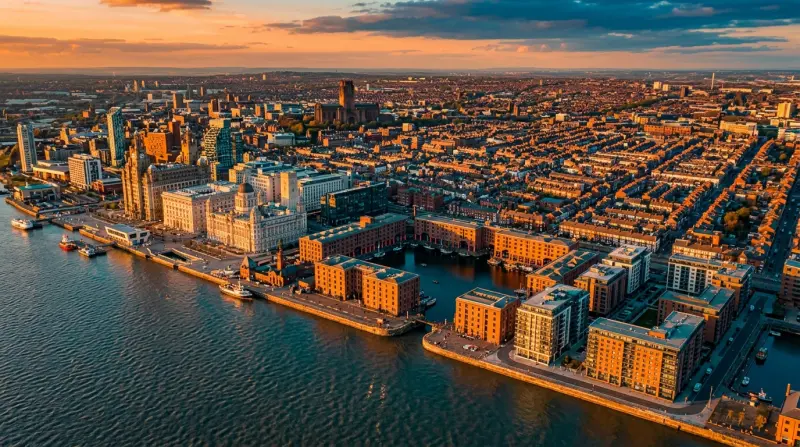
Liverpool is one of the strongest property investment cities in the UK. Rental yields consistently rank among the highest nationally, regeneration programmes continue to reshape entire districts, and a student population exceeding 70,000 drives year-round demand for accommodation. For business borrowers and property investors, the city presents opportunities that reward those who can act decisively.
Bridging finance provides the speed and flexibility to capitalise on Liverpool's market. Whether acquiring a buy-to-let terrace in Wavertree, converting a property into an HMO near the university campuses, or completing on a commercial unit in the Baltic Triangle before a competitor, short-term property finance removes the delays that cause deals to collapse.
This guide covers how bridging loans work in the context of Liverpool's property market, which investment strategies benefit most from interim funding, and how to structure a facility that matches the city's specific opportunities.
Why Liverpool Attracts Property Investors
Liverpool's investment appeal rests on fundamentals that have strengthened steadily over the past decade. Understanding these dynamics helps investors identify where bridging finance adds the most value.
Rental Yields Above the National Average
Liverpool consistently delivers gross rental yields between 6% and 10% depending on the area and property type, compared with a national average closer to 4-5%. Postcodes in L6 (Anfield, Everton), L7 (Edge Hill, Kensington), and L15 (Wavertree) regularly feature in lists of the UK's highest-yielding areas for residential investment. These returns attract portfolio landlords from across the country, many of whom use bridging finance to move quickly on acquisitions before competing offers materialise.
For investors new to property-backed lending, our guide on what a bridging loan is explains the fundamentals before diving into Liverpool-specific considerations.
Multi-Billion Pound Regeneration
Liverpool's physical transformation continues at pace across several major regeneration zones:
- Liverpool Waters -- a 60-hectare docklands regeneration stretching north from Princes Dock, delivering thousands of residential units, commercial space, and a cruise liner terminal over the coming decades
- Baltic Triangle -- once a cluster of disused warehouses south of the city centre, now an established creative and digital quarter with surging demand for commercial and residential space
- Ten Streets -- a 125-acre regeneration district in the north docks area, designated as a creative and digital enterprise zone with planning frameworks designed to attract investment
- Knowledge Quarter -- centred around the University of Liverpool, Liverpool School of Tropical Medicine, and the Royal Liverpool Hospital campus, this zone is drawing life sciences and technology investment
- Anfield and Walton -- residential regeneration linked to Liverpool FC's stadium expansion, with new-build housing, improved infrastructure, and rising property values in surrounding streets
Each of these zones creates opportunities for property investors. Acquiring assets ahead of infrastructure delivery, securing commercial units in emerging districts, or converting residential stock near expanding institutions -- all are strategies that benefit from the rapid funding that bridging finance provides.
Three Major Universities
The University of Liverpool, Liverpool John Moores University (LJMU), and Liverpool Hope University collectively enrol over 70,000 students. This population, concentrated primarily around the L3, L6, L7, and L15 postcodes, generates sustained demand for student accommodation, HMO rooms, and purpose-built rental units. The academic cycle creates predictable letting patterns, and the sheer scale of the student population means vacancy rates in well-located properties remain low.
Investment Strategies That Benefit from Bridging Finance in Liverpool
Buy-to-Let Acquisitions
Liverpool's terraced housing stock is the backbone of the city's rental market. Two-bedroom terraces in L7 (Kensington), L6 (Anfield), and L4 (Walton) can be acquired at price points that deliver strong cash-on-cash returns once tenanted. The challenge is speed -- desirable properties at the right price attract multiple offers, and vendors consistently favour buyers who can demonstrate immediate funding capability.
A buy-to-let bridging loan allows investors to exchange contracts within days, complete the purchase, carry out any necessary works, and then refinance onto a standard buy-to-let mortgage once the property is tenanted and meets lender criteria. This buy-refurbish-refinance cycle is particularly effective in Liverpool, where the spread between purchase price and post-works valuation can be substantial.
HMO Conversions
Liverpool is one of the UK's most active markets for houses in multiple occupation. Proximity to the three universities, combined with affordable Victorian terraces that lend themselves to subdivision, makes HMO conversion a proven investment model. Areas such as Kensington (L7), Smithdown Road corridor (L15), and sections of Edge Hill see strong demand from students, young professionals, and key workers for well-managed HMO accommodation.
Converting a standard terraced house into a licensed HMO involves planning considerations, building works, and the licensing process itself. Mortgage lenders will not advance against an incomplete conversion, which means the acquisition and works phase requires alternative funding. Bridging finance covers both the purchase and conversion costs within a single facility. Once the HMO is complete, licensed, and generating rental income, the borrower exits onto a specialist HMO mortgage based on the improved value.
For more complex structures where the investment property already carries a mortgage, a second charge bridging loan can provide the additional funding needed without disturbing the existing facility.
Auction Purchases
The North West property auction circuit is one of the busiest in England. Liverpool properties appear regularly at regional auction houses - Sutton Kersh is the established Merseyside specialist, with further coverage from BTG Eddisons Property Auctions and Auction House North West. Lots frequently sell at prices below open-market value. The standard auction format requires a 10% deposit on the day, with completion within 28 days -- a timeline that eliminates conventional mortgage applications entirely.
Auction property finance is designed precisely for this scenario. With a decision in principle arranged before auction day, investors can bid with confidence, pay the deposit from their own funds, and complete using bridging finance well within the 28-day window. Liverpool auction lots range from single terraces in L4 and L5 through to multi-unit commercial buildings in the city centre, and bridging facilities from Mallard cover values from £25,250 to £40,000,000.
Exploring a Liverpool Property Investment?
Our bridging finance specialists are available Monday-Friday, 9:00 AM - 5:30 PM.
Commercial Property and Mixed-Use Buildings
Liverpool's commercial property market presents opportunities beyond residential buy-to-let. The Baltic Triangle, Ropewalks, and the city centre around Castle Street and Dale Street contain office space, retail units, and mixed-use buildings that investors acquire for conversion, refurbishment, or long-term hold as income-producing assets.
Commercial bridging works in the same way as residential -- fast assessment, rapid completion, and a clear exit onto commercial mortgage or sale. Mixed-use buildings with residential upper floors and commercial ground-floor units are particularly common in Liverpool and can be funded within a single bridging facility.
Student Accommodation Investments
The scale of Liverpool's student population creates a distinct market for purpose-built and converted student accommodation. Blocks of self-contained studios, cluster flats, and converted buildings near the university campuses in the Knowledge Quarter and along Brownlow Hill command premium rents during term time. Investors acquiring these assets often use bridging finance to move quickly, particularly when buying from developers who need a fast sale or when properties emerge at auction.
Development and Refurbishment Projects
Liverpool's housing stock includes thousands of Victorian and Edwardian terraces, many of which require modernisation before they meet current letting standards or EPC requirements. Refurbishment bridging covers the purchase price and works costs, with funds for building works sometimes released in stages as the project progresses. Typical projects include full internal renovation, loft conversions to add bedrooms, and upgrading properties from EPC Band E or F to Band C or above.
For larger schemes -- converting a commercial building into residential flats, or developing a vacant plot -- the same bridging principles apply, with the facility structured around the project timeline and exit strategy.
Liverpool Areas for Property Investment
Understanding Liverpool's geography helps investors target the right areas for their strategy.
High-Yield Buy-to-Let Postcodes
L4 (Walton and Anfield), L6 (Anfield and Everton), and L7 (Edge Hill and Kensington) are among the highest-yielding postcodes in England. Predominantly terraced stock at accessible price points makes these areas popular with portfolio landlords seeking volume acquisitions. The Anfield area benefits from ongoing regeneration linked to Liverpool FC's stadium expansion, which is lifting values in surrounding streets.
HMO Conversion Hotspots
L7 (Kensington and Edge Hill) is the primary HMO territory due to proximity to all three university campuses. Victorian terraces are well-suited to subdivision, and rental demand runs throughout the academic year and beyond. L8 (Toxteth and Dingle) offers larger Victorian properties ideal for HMO conversion at price points below the city centre, with improving transport links and rising investor interest. L15 (Wavertree) along the Smithdown Road corridor is one of Liverpool's most established student rental areas, where the buy-refurbish-refinance cycle works particularly well.
Commercial and Mixed-Use Areas
L1 (City Centre) commands premium rents from young professionals and students, with ongoing regeneration around Liverpool ONE and the Ropewalks district. L2 and L3 (Commercial District and Waterfront) present office conversion opportunities, Albert Dock adjacency, and frontline exposure to the Liverpool Waters regeneration. Mixed-use buildings here combine ground-floor commercial with upper-floor residential, fundable within a single bridging facility.
Higher-Value Residential Investment
L17 (Aigburth) is a higher-value residential area with family rental demand. Properties here suit investors targeting lower-yield but higher-quality tenants. Bridging enables competitive offers against owner-occupier buyers in this market.

How Bridging Finance Works for Liverpool Properties
The process for arranging a bridging facility on a Liverpool property follows the same structure as any UK bridging loan, with assessment tailored to the local market.
Step 1: Initial Enquiry and Decision
Contact Mallard Bridging with the basic details of the property and your investment plan. An initial assessment is typically provided on the same business day, confirming whether the deal is viable and outlining a quote.
Step 2: Valuation
A desktop valuation is arranged to confirm the property's current market value and, where applicable, its projected value after refurbishment or conversion. Liverpool's active market means comparable evidence is readily available across most postcodes, which helps expedite this stage.
Step 3: Legal Process
Independent solicitors act for both borrower and lender. Having a solicitor already instructed -- particularly one familiar with Liverpool's Land Registry requirements and local authority searches -- removes a common source of delay. Title checks, search results, and any necessary consents are processed in parallel with the valuation.
Step 4: Completion and Funds Release
Once valuation and legal work are satisfactory, funds are released to your solicitor's account. For straightforward first charge deals with everything aligned, this can happen within days of the initial enquiry. All costs -- setup fees, legal fees, and interest -- are rolled into the gross loan amount. There are no monthly payments during the term, no exit fees, and a timely repayment discount is available for settling on or before the agreed date.
Step 5: Exit
The exit strategy is agreed at the outset and forms a central part of every application assessment. Common exits for Liverpool properties include:
- Refinance onto a buy-to-let mortgage once the property is tenanted and meets lender criteria
- Refinance onto a commercial mortgage for business premises or mixed-use assets
- Sale of the property on the open market or to another investor
- Refinance onto an HMO mortgage once conversion is complete and the property is licensed
For a detailed look at planning your exit, see our guide on bridging loan exit strategies.
Costs and Fee Structure
Mallard Bridging operates a transparent pricing model. All costs are rolled into a single gross loan amount, so the borrower receives the net sum needed and repays one figure at exit. There are no separate invoices for arrangement fees, no valuation charges billed directly, and no exit fees.
This structure is particularly valuable for Liverpool investors running multiple projects, as it simplifies cashflow planning and removes the need to fund fees from separate sources. For a comprehensive breakdown of how bridging costs work, see our costs and fees guide.
The key elements included in the gross loan:
- Setup and arrangement fees included in the loan
- Legal costs for both borrower and lender solicitors included
- Desktop valuation costs included
- Interest rolled up and repaid at exit -- no monthly payments
- No exit fees at all
- Timely repayment discount for settling on or before the agreed date
Pricing is individually assessed based on factors including the loan-to-value ratio, property type, location within Liverpool, and the strength of the exit strategy. To see indicative figures for your specific scenario, use the calculator below for indicative figures.
Liverpool Market Considerations for Investors
Licensing Requirements
Liverpool City Council operates a selective licensing scheme in certain wards. Properties in designated areas require a selective licence even for standard single-household letting, and HMO properties across the city require mandatory or additional licensing depending on size and occupancy. These licensing obligations do not prevent bridging finance, but they form part of the exit strategy assessment -- a lender needs confidence that the property will be licensable before approving an HMO conversion facility.
Article 4 Directions
Liverpool has Article 4 directions in place across parts of the city that remove permitted development rights for converting dwelling houses (C3) to small HMOs (C4). This means planning permission is required for HMO conversions in affected areas. Investors considering HMO strategies in these zones need to factor planning timescales into their bridging loan term. This is a routine consideration rather than a barrier -- many Liverpool investors successfully navigate the planning process within a standard bridging term of 6 to 12 months.
EPC and Minimum Energy Standards
Older terraced stock in Liverpool frequently carries EPC ratings of E or below. Current minimum energy efficiency standards require rental properties to achieve at least Band E, with proposals to tighten this to Band C in future. Bridging-funded refurbishments that include energy efficiency improvements -- new boilers, insulation, double glazing -- position the property to meet both current and anticipated requirements, protecting the long-term rental income that underpins the exit strategy.
Who Can Apply
Mallard Bridging provides business bridging loans to:
- Individual investors operating as sole traders or in business capacity
- Limited companies (SPVs, trading companies, and holding structures)
- Partnerships and LLPs
- Experienced portfolio landlords and first-time investment buyers acting for business purposes
All lending is for business and investment purposes only. Mallard Bridging is not authorised or regulated by the Financial Conduct Authority and does not offer consumer credit or residential mortgages for owner-occupation.
Facilities are available from £25,250 to £40,000,000 and are secured against property in England and Wales, including all Liverpool postcodes.
Next Steps for Liverpool Property Finance
Liverpool's combination of strong yields, active regeneration, and a deep pool of investable stock makes it one of the most compelling cities for property-backed business lending in the UK. Whether the opportunity is a single terraced house at auction, an HMO conversion near the universities, or a commercial unit in an emerging district, bridging finance provides the speed to secure the asset and the flexibility to execute the investment plan.